Resultats d analyse
L IA a selectionne les lieux les plus probables selon l image, les details visibles et les indices contextuels.
The image strongly suggests a location in India due to multiple cultural indicators. The two women appear to be of South Asian ethnicity.
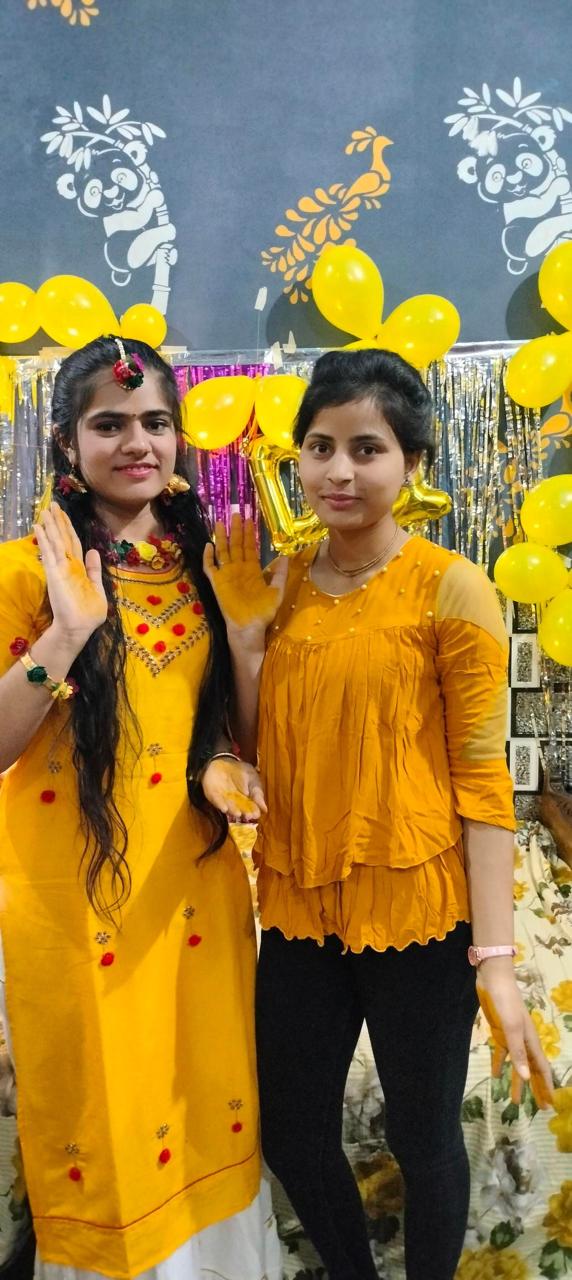
The woman on the left, in particular, has yellow turmeric paste (haldi) on her hands and face, and is wearing floral jewelry (maang tikka, necklace). This, combined with the yellow-themed decorations (balloons) and clothing, is characteristic of a Haldi ceremony, a pre-wedding ritual common in Hinduism.
The setting is an indoor residential space. While the country is almost certain to be India, pinpointing a specific city or region is impossible based on the visual evidence.
Uttar Pradesh, being the most populous state, is a statistically probable location. Lucknow is chosen as a representative major city within this region.
The wall decals of a panda and a peacock are generic and do not provide specific location information. Based on the strong evidence of a Hindu Haldi ceremony (turmeric paste, yellow theme, floral jewelry) and the ethnicity of the individuals, the location is very likely India.
The indoor setting lacks any specific geographical markers. Delhi, as a major metropolitan hub and the capital, represents a high-probability location for such a scene within India.
The clothing and decorations are modern and could be found in any major Indian city. This candidate is based on probability rather than direct visual evidence for the specific city.
The scene is identified as a Haldi ceremony in India due to the turmeric paste on the women's hands, the yellow color scheme, and their appearance. This points to a location within India.
The specific region is difficult to determine, but North and East India are strong possibilities. Bihar is a populous state where these traditions are prevalent.
Patna is selected as a representative city. This choice is speculative and based on cultural context and population distribution, as there are no visual cues to differentiate it from other Indian cities.
Based on the strong evidence of a Hindu Haldi ceremony (turmeric paste, yellow theme, floral jewelry) and the ethnicity of the individuals, the location is very likely India. The indoor setting lacks any specific geographical markers. Delhi, as a major metropolitan hub and the capital, represents a high-probability location for such a scene within India. The clothing and decorations are modern and could be found in any major Indian city. This candidate is based on probability rather than direct visual evidence for the specific city.
The scene is identified as a Haldi ceremony in India due to the turmeric paste on the women's hands, the yellow color scheme, and their appearance. This points to a location within India. The specific region is difficult to determine, but North and East India are strong possibilities. Bihar is a populous state where these traditions are prevalent. Patna is selected as a representative city. This choice is speculative and based on cultural context and population distribution, as there are no visual cues to differentiate it from other Indian cities.
🗺 Sur la carte
 высокая уверенность
•
высокая уверенность
•
 средняя
•
средняя
•
 низкая
Comment l IA a pris sa decision
Environnement
Indoor • None visible • Unknown (indoor setting)
Infrastructure
None visible • Interior of a modern residential home with painted walls and wall decals. • Interior of a residential home.
Texte visible et panneaux
L IA n a detecte aucun texte lisible ou signalisation.
Contexte et culture
None visible